
An online recovery claim can arrive when you are tired, worried, or looking for a clear next step. A video promises a fast solution. A product review sounds convincing. A friend sends an article that seems to contradict your treatment plan. Before acting, it helps to slow the decision down and identify what the claim actually says.
You do not need to become a researcher to read health information more carefully. A practical review can separate a person's experience, a treatment advertisement, a research finding, and advice intended for your own care. Those categories can all appear on the same screen, but they serve different purposes.
This guide offers a process for adults evaluating recovery-related health information. It is educational, not a way to diagnose yourself or replace professional advice. Do not stop prescribed treatment, begin an unfamiliar product, or postpone urgent care because of something you read online.
In this guide

- Turn the headline into a specific claim
- Identify who is speaking and what they are selling
- Follow the evidence beyond the headline
- Separate a personal story from a treatment promise
- Notice pressure and product safety concerns
- Check whether information applies to your situation
- Protect privacy while looking for help
- Bring one useful item into a care conversation
- Build a small reliable information routine
- Frequently asked questions
Turn the headline into a specific claim
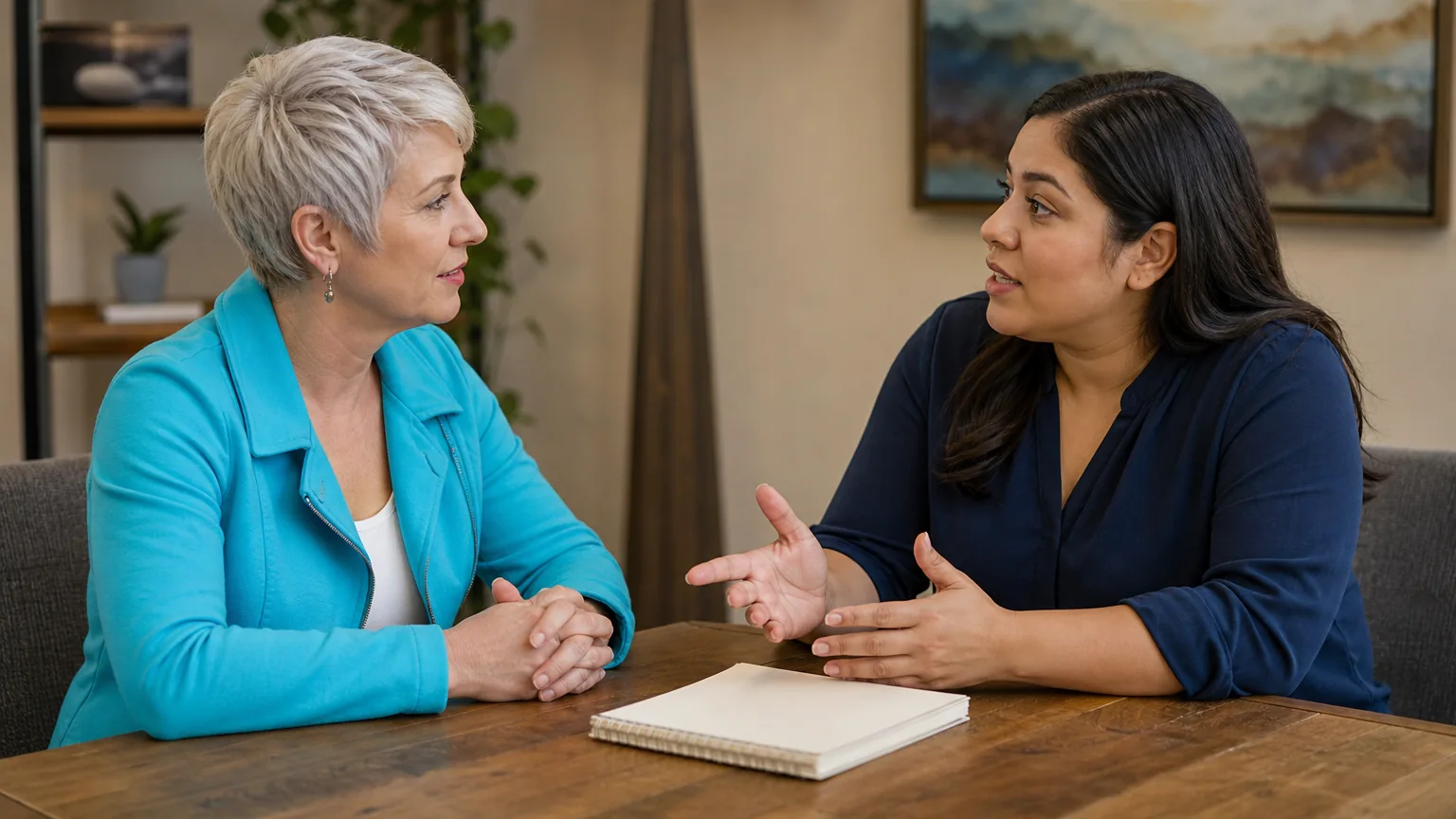

Start by writing a one-sentence version of the message in plain language. Leave out dramatic wording and focus on what the reader is being asked to believe or do. A headline about “transforming recovery” might actually be claiming that a particular supplement reduces cravings, that one therapy helps a particular group, or that a service has immediate openings.
These are different claims. A clinical claim needs evidence about health effects. A claim about appointment availability needs confirmation from the actual service. A statement about one person's experience needs to be read as that person's account rather than a general prediction.
Identify the proposed action. Does the content encourage you to buy, enroll, change medication, share personal information, or simply learn more? Knowing the action helps you decide how much verification is necessary before proceeding.
Write down what is missing. You may not know which population the claim concerns, how improvement was measured, or whether the author is discussing a specific product. An incomplete statement should stay incomplete in your notes. Do not fill the gaps with the interpretation you most hope is true.
For example, “This method helped people” leaves several uncertainties. Which people? Compared with what? Over what period? You can record those gaps without turning the review into an argument with the person who shared the content.
If the claim is too vague to summarize, that is a useful finding. You can set it aside until clearer information is available. There is no obligation to make a treatment decision from a slogan, a short clip, or a comment thread that never states its actual meaning.
Identify who is speaking and what they are selling

Look for the organization or person responsible for the content. A familiar logo, professional-looking design, or confident voice does not establish expertise. Find the source's own description, contact information, and explanation of its purpose.
MedlinePlus recommends checking who runs a health website, how information is reviewed, when it was updated, and where its supporting sources come from. It also encourages discussing information with a health professional before relying on it for personal care. MedlinePlus guidance on evaluating health information.
Keep credentials specific. A person may have expertise in one area without being qualified to advise on every recovery-related issue. A content writer, peer supporter, researcher, and prescribing clinician have different roles. Avoid assigning a clinical role simply because someone speaks about health.
Check whether the content leads to a product or service. Commercial content can contain accurate information, but its purpose matters. A useful review separates the educational explanation from the sales offer rather than assuming either that all advertising is false or that polished advertising is neutral.
NCCIH explains that online advertising can resemble ordinary news or educational material. Identifying sponsorship and commercial intent helps readers interpret the page more carefully. NCCIH guidance on news and advertising.
Keep the same standard for content you already agree with. It is easy to inspect an unfamiliar source closely while accepting a familiar account without checking. The practical goal is consistency: understand who is making the statement, what role they have, and what action benefits them before allowing the statement to guide your care.
Follow the evidence beyond the headline

A citation is a starting point, not a guarantee. Open the linked source and check whether it actually supports the claim being made. Sometimes a page links to research about a broad topic while making a much stronger statement about a specific product or outcome.
Look for a match between the research and the claim. If the content concerns adults receiving outpatient treatment, a study in a different population may not answer the same issue. If a headline promises long-term improvement, a short study may not establish that outcome.
NCCIH's research-literacy guidance encourages attention to study design, participants, limitations, and the broader body of evidence. A single finding is best considered in context rather than treated as the final answer. NCCIH guide to understanding health research.
You do not need to interpret every statistical detail. Record the parts you can identify: what was studied, who participated, what was measured, and what the authors say remains uncertain. If you cannot access the study, note that limitation rather than assuming the headline is an accurate substitute.
Be careful with the word “proven.” A study may find an association without showing that one thing caused another. A result for a group also does not predict exactly what will happen to one person. If the explanation skips from a research observation to a personal guarantee, pause before acting.
Keep one or two original links rather than collecting dozens of summaries of the same finding. Ten sites repeating a press release are not ten independent studies. A smaller set of clearly identified sources will be easier to discuss with a clinician and less likely to become a confusing pile of conflicting headlines.
Separate a personal story from a treatment promise


Personal recovery stories can offer connection, language for a difficult experience, and a sense that other people have faced similar problems. They can be meaningful without functioning as evidence that a particular treatment will work for everyone.
Notice the difference between “this helped me” and “this will help you.” The first is an account of experience. The second makes a broader prediction that needs additional support. A sincere speaker may not know which parts of their situation were most important or whether their experience will apply to someone else.
Look for the full context when it is available. The person may have received several kinds of support, changed circumstances, or followed a treatment plan that is not described in a short video. Avoid attributing the entire outcome to the single product or habit highlighted in the post.
You can keep the useful part of a story without copying the treatment decision. For example, a person's description of embarrassment might help you name a concern for counseling. That does not require you to adopt their medication choices, provider, or recovery timeline.
The same distinction applies to negative stories. One difficult experience can be important and worth discussing, but it does not establish what your experience will be. If the story raises a specific safety concern, take that concern to a qualified professional rather than dismissing it or treating it as a universal warning.
When sharing a story with someone else, describe it accurately: “This person's account helped me think about support.” Avoid presenting it as proof of a cure or a reason for another person to stop treatment. Respecting lived experience includes keeping its meaning intact rather than asking it to carry a claim it cannot establish.
Notice pressure and product safety concerns

Health decisions deserve room for clarification. Be cautious when content insists that you must act immediately, keep a purchase secret from your clinician, or abandon ordinary care to benefit. Those demands make it harder to evaluate the choice carefully.
FDA describes health-fraud products as products promoted to prevent, treat, or cure conditions without being proven safe and effective for those uses. Such products can waste money, delay appropriate care, and cause serious harm. FDA health-fraud information.
A product's natural-sounding name does not establish safety. Dietary supplements can affect the body and interact with medicines; FDA does not approve dietary supplements for safety and effectiveness before they are marketed. Discuss products with a clinician or pharmacist before using them, especially when you already take medication. FDA dietary-supplement guidance.
Save the exact product name and ingredient list if you need professional guidance. A vague description such as “a recovery blend” may not identify what is in it. Do not open or consume an unfamiliar product merely to make the conversation easier.
Separate financial urgency from medical urgency. A discount ending tonight does not make a product medically necessary tonight. If you are experiencing urgent symptoms, seek appropriate care instead of treating a sales page as an emergency service.
If you have already used a product and feel unwell, contact a medical professional or Poison Help at 1-800-222-1222 in the United States. For severe symptoms or a possible emergency, call 911. Keep the package available for identification when safe to do so. Poison Help contact information.
Check whether information applies to your situation

Reliable general information can still be the wrong basis for a personal decision. Your medicines, health conditions, substance use history, current symptoms, and treatment setting may change how a recommendation applies. A source can be credible without knowing those details about you.
Write down the difference between the page's audience and your situation. Is it about adults or adolescents? A hospital setting or ordinary daily life? Prevention or treatment of an existing condition? These distinctions can help a professional explain why a general recommendation does or does not fit.
Do not use a checklist to assign yourself a diagnosis or level of care. A page may describe features of a condition without evaluating other possible explanations. Similarly, an article about outpatient treatment cannot establish that outpatient care is sufficient for every reader.
Service details require their own verification. A blog may explain intensive outpatient care generally while a provider's actual schedule, admission criteria, or available services differ. Confirm those operational details with the provider rather than treating a general description as a booking promise.
Choice Recovery Path's intensive outpatient program page describes its outpatient approach. Its admissions page is a route to discuss current options and individual needs. Choice describes adult outpatient services in Albuquerque and Las Cruces; a general recovery article does not establish a new location, guaranteed opening, or eligibility for a particular person.
If a source appears to conflict with your current plan, preserve the exact statement and contact the treating professional. Continue following your existing instructions unless a qualified clinician changes them or an emergency requires immediate care. The next useful step is clarification, not an unsupervised experiment based on an incomplete comparison.
Protect privacy while looking for help


Before entering sensitive information, identify the organization receiving it and the purpose of the form. A page offering general education does not necessarily need your treatment history, insurance details, or identity documents. Consider whether you can obtain the basic information without sharing more than necessary.
MedlinePlus advises reviewing how a website uses personal information and avoiding disclosure when you are uncomfortable with the risks. A privacy policy is useful to read, but its presence alone does not tell you that every sharing decision is appropriate. MedlinePlus health-information guidance.
When contacting a known provider, use contact information obtained from its verified website or another trusted record. A social media reply from an unfamiliar account may not represent that provider. If a message unexpectedly requests payment or documents, verify the request through a separate known contact route before responding.
Keep personal details out of public comment threads. You can discuss a general topic without posting medication lists, identifying documents, or another person's health history. If a friend wants to help, share only what is necessary for that help and make your preferences clear.
On a shared device, think about saved forms, downloaded documents, and browser history. Choose a private way to keep material you want to discuss at an appointment. A paper note with the article title may be more suitable than saving detailed health information in an account other people use.
If you realize you shared more than intended, focus on the next practical action. Contact the organization through a verified route, review available privacy controls, and seek appropriate help for the specific issue. Avoid sending additional sensitive details to an unverified account that promises to fix the problem.
Bring one useful item into a care conversation

Choose the item that most affects a decision you are considering. A single article, product label, or claim is easier to review than a large collection of screenshots with no clear concern. Save the original link and the date you accessed it.
Write a short note with three parts: the claim, why it matters to you, and the decision you have not made. For example: “This article says a supplement helps sleep. Sleep has been difficult, and I have not started the product.” That gives the clinician a clear starting point and avoids implying that you need to defend a purchase or belief.
Use the right professional for the issue. A pharmacist or prescriber can address medicine and supplement concerns. A counselor can help explore the emotions, expectations, or behavior around a claim. The provider's administrative team can confirm scheduling or enrollment information. One person may refer you to another when the concern falls outside their role.
If the response is unclear, request an explanation in familiar language and repeat back what you understood. Clarify the action you should take now and what follow-up is needed. You do not need to leave with a detailed scientific lecture to leave with a usable plan.
Record the outcome in your own words. “Do not start the product; pharmacist will review the ingredients” is more useful than “discussed internet article.” If the decision remains unresolved, identify who will respond and how you will receive the update.
Avoid using the appointment to settle an online argument. The purpose is to support your care, not to obtain a quotation that proves another commenter wrong. Keeping that purpose visible can make the conversation calmer and more productive.
Build a small reliable information routine

Create a short list of sources you can return to instead of restarting every search from social media. Government health sites, research institutions, and other accountable sources can provide a starting point. Still check the specific page, its date, and its relevance rather than relying on the domain alone.
Set a stopping point for a nonurgent search. You might identify one credible overview and one original source, then save the unresolved issue for a care conversation. More browsing is not always more clarity, especially when you keep encountering summaries of the same material.
If searching leaves you more distressed or interferes with sleep and daily responsibilities, discuss that pattern with a counselor. You can work on the searching behavior while still taking the underlying health concern seriously. Reducing an unhelpful search cycle does not require ignoring symptoms.
Keep shared information carefully labeled. A folder can separate “general education,” “for clinician review,” and “instructions from my care team.” This reduces the chance of treating a saved article as though it were a personal medical instruction.
For your next review, choose one claim and follow the process through to a practical outcome: save it for discussion, confirm the service detail, reject an unsupported purchase, or leave the issue unresolved until better information is available. A careful pause is a useful decision when the evidence is incomplete.
Frequently asked questions

Can an accurate health article replace advice from my clinician?
No. General information does not account for your full health history, medicines, symptoms, and treatment needs. Use it to support a conversation rather than changing care on your own.
Is a personal recovery story evidence that a treatment works for everyone?
No. A personal story can be meaningful without predicting another person's results. Separate the speaker's experience from any broader treatment claim that requires additional evidence.
Does a scientific citation make an online claim reliable?
Not automatically. Open the source and check whether it supports the actual claim, involves a relevant population, and acknowledges limitations. A citation can be real while the headline overstates its meaning.
Are natural supplements automatically safe during recovery?
No. Supplements can interact with medicines and may carry risks. Review the exact product and ingredients with a clinician or pharmacist before using it, especially alongside prescribed treatment.
How can I discuss a confusing online claim at an appointment?
Save the original link or product label, summarize the claim, and explain the decision it affects. Focus on one useful item and clarify what action, if any, is appropriate for your situation.