
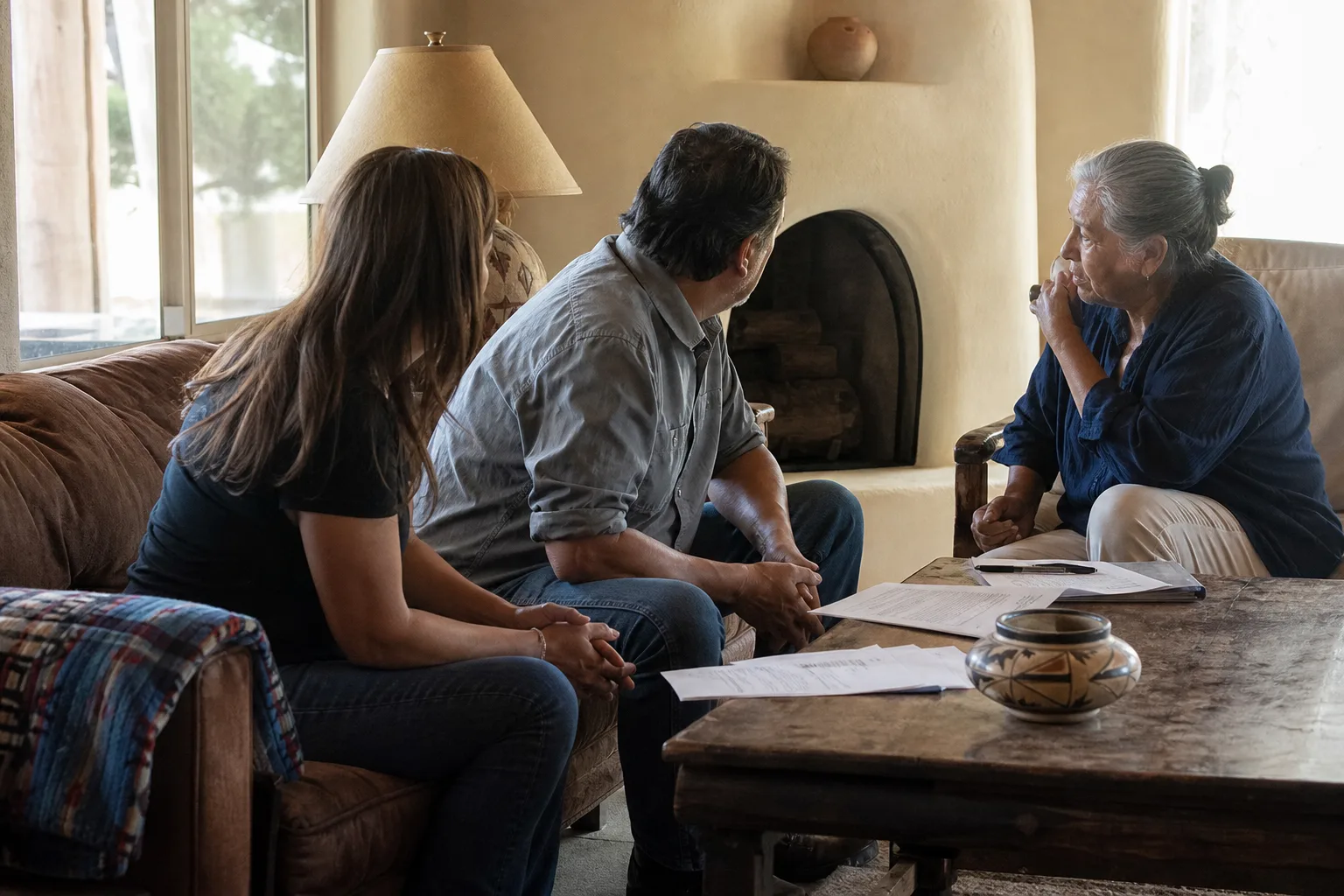
Nar-Anon is a free peer support option for families, while insurance for addiction treatment usually applies to clinical services such as assessment, outpatient addiction treatment, and intensive outpatient program (IOP) care. In Albuquerque, a person may use Choice Recovery Path’s IOP or outpatient addiction treatment while family members seek Nar-Anon support separately. Because these services play different roles, it can help to ask what your insurance plan may cover for treatment and what payment options may be available. If you are considering care at Choice Recovery Path, you can call to ask about the current schedule and discuss next steps.
What is the difference between Nar-Anon and clinical addiction treatment?
Nar-Anon is a peer support group for family members and friends affected by someone else’s drug use. It is not medical care, and it is not the same as counseling, an assessment, or a treatment program. People often go to Nar-Anon to feel less alone, hear from others with similar experiences, and learn healthier ways to respond to stress at home. That kind of support can be meaningful, but it is different from care provided through a licensed addiction treatment program. Ask about the Choice intensive outpatient program (IOP) and outpatient addiction treatment in Albuquerque.
By contrast, insurance for addiction treatment usually applies to clinical services. That may include an evaluation, treatment planning, medication-related visits when available through a provider, outpatient addiction treatment, or an intensive outpatient program (IOP). In Albuquerque, New Mexico, families looking at Choice Recovery Path’s IOP may also be searching for Nar-Anon meetings. It helps to think of these as two separate lanes: one is peer support for families, and the other is professional treatment for substance use.
A simple way to understand the difference is to ask what the service is designed to do. Nar-Anon helps family members find community and support. Clinical treatment focuses on a person’s substance use, safety, daily functioning, and recovery plan. Some people use both at the same time. A loved one might enter outpatient addiction treatment or IOP, while a spouse, parent, or sibling attends Nar-Anon for their own support and boundaries.
- Nar-Anon is peer support, not clinical treatment.
- Insurance for addiction treatment usually applies to covered healthcare services.
- A family member can attend Nar-Anon even if a loved one is not ready for treatment.
- A person in treatment may still benefit when family members have their own support.
Can insurance pay for Nar-Anon, or only for treatment services?
In most cases, Nar-Anon itself is not billed like healthcare. It is a peer fellowship, not an insured clinical service. That means insurance for addiction treatment is usually not used for Nar-Anon meetings. Instead, insurance may be used for covered services related to substance use treatment, such as an assessment or ongoing outpatient care. Coverage varies by plan, so families should not assume the same benefits apply to every kind of support.
This is where many families get stuck. They hear about family support groups and treatment programs at the same time and expect insurance to work the same way for both. It usually does not. If you are exploring Choice Recovery Path’s IOP in Albuquerque, New Mexico, or another level of outpatient addiction treatment, it is reasonable to ask what parts may be billable to insurance and what support options are separate from insurance.
The chart below can help clear up the basic difference. It does not replace speaking with your insurance company or a treatment program’s admissions team, but it can make the first conversation easier.
| Service type | Main purpose | Usually billed to insurance? |
|---|---|---|
| Nar-Anon meeting | Peer support for family and friends affected by a loved one’s drug use | Usually no |
| Clinical assessment | Helps a provider understand treatment needs and recommend a level of care | Often may be covered, depending on plan |
| Outpatient addiction treatment | Ongoing clinical care while living at home | Often may be covered, depending on plan |
| Intensive outpatient program (IOP) | Structured treatment with more support than standard outpatient care | Often may be covered, depending on plan |
Addiction Treatment and IOP at Choice Recovery Path
Choice Recovery Path offers addiction treatment in Albuquerque, New Mexico for adults who want structured support while living at home. Its intensive outpatient program (IOP) in Albuquerque brings weekly group and individual therapy, early recovery skills, and practical tools for change into daily life.
- What IOP looks like: regular group work and one-to-one therapy, with peer support, life skills, medical provider support and medication-assisted treatment that may be part of care.
- Who it is for: adults who need more structure than standard outpatient care, people stepping down from inpatient or residential treatment, and people starting care in the community.
- Schedule: sessions fit around work and home life. Call for the current IOP schedule, program length and openings.
Call (505) 526-3649, verify your insurance, or start admissions to ask whether IOP or outpatient addiction treatment fits your needs.
For the full overview, start with Nar-Anon Meetings In New Mexico. Related reading: Nar-Anon And Addiction Treatment Albuquerque, When Families Need Treatment Beyond Nar-Anon.
How can families use Nar-Anon while a loved one is in IOP or outpatient addiction treatment?
Families do not have to choose between supporting a loved one and getting support for themselves. In many situations, the most stable path is for each person to have their own place to work on recovery and coping. If someone is attending an intensive outpatient program (IOP) or another form of outpatient addiction treatment, Nar-Anon may give relatives a separate space to process fear, anger, confusion, or guilt without putting all of that weight on the person in treatment.
This can be especially helpful early in treatment, when everyone is learning new routines and expectations. Families may want quick answers about how recovery will go, but treatment often unfolds step by step. A loved one in IOP may be focusing on attendance, honesty, substance use triggers, and daily stability. Family members may need help with boundaries, communication, and self-care. Nar-Anon and treatment can support those different needs at the same time.
At Choice Recovery Path in Albuquerque, New Mexico, families can ask the admissions or clinical team how loved ones are typically involved, what communication policies exist, and whether a referral to outside family support may be useful. Nar-Anon does not replace treatment, and treatment does not replace peer support for family members. Used together, they can create a more grounded recovery environment at home.
- Let the person in treatment handle their own clinical work with the treatment team.
- Use Nar-Anon for your own support instead of relying only on the person in recovery.
- Ask clear questions about privacy, family involvement, and program expectations.
- Focus on daily routines, safety, and boundaries at home.
- Avoid treating Nar-Anon as a substitute for professional addiction care.
What if mental health concerns are part of the picture too?
Substance use and mental health concerns can affect each other. Some people seeking addiction treatment also live with depression, anxiety, bipolar disorder, obsessive-compulsive symptoms, trauma-related stress, or other mental health concerns. That does not mean a family member should try to diagnose what is happening. It does mean the treatment process may need to consider both substance use and mental health together, especially when symptoms make daily life harder or increase risk.
If you are looking into insurance for addiction treatment, ask whether the program can address co-occurring substance use and mental health needs or help with a referral when needed. It is okay to ask Choice Recovery Path’s admissions or clinical team whether a specific service is available in Albuquerque or whether another referral might fit better. Being direct about mood changes, panic, sleep problems, intrusive thoughts, or past mental health care can help the team think through next steps safely.
Urgent safety concerns need faster action than a routine insurance question. If someone is in immediate danger, call 911. If there is suicidal crisis, emotional distress, or you are not sure what to do next, call or text 988 for immediate support. Nar-Anon can be comforting, but it is not crisis care. The same is true for insurance calls. In an emergency, start with safety first and sort out treatment details after the crisis is addressed.
- Share concerns about both substance use and mental health when calling for help.
- Ask whether the program can treat co-occurring needs or offer a referral.
- Do not wait for an insurance answer during a crisis.
- Use 911 for immediate danger and 988 for mental health or suicide crisis support.
What should you ask when checking insurance for addiction treatment in Albuquerque?
Insurance language can feel hard to follow, especially when your family is already stressed. It helps to slow down and ask simple, practical questions. If you are considering Choice Recovery Path’s intensive outpatient program (IOP) or another outpatient addiction treatment option in Albuquerque, New Mexico, ask what level of care seems appropriate, what your plan may cover, and what costs you may still be responsible for. You do not need to know every insurance term before making the call.
You can also ask how admissions works, what information the program needs, and whether there is a wait before starting. Families sometimes focus only on coverage and forget to ask about schedule, transportation, work conflicts, childcare, or how treatment fits with daily life. Those questions matter because a plan has to be realistic to be useful. If your loved one lives near Las Cruces or Albuquerque, ask which office location may fit best and what the next step looks like.
If you want to speak with Choice Recovery Path directly, you can call (505) 526-3649 and ask general questions about intake, insurance, and levels of care. A careful admissions conversation can help families sort out what Nar-Anon is for, what insurance for addiction treatment may help with, and what needs a separate community support plan. The goal is not to promise a perfect answer right away, but to get a clearer path forward.
- Does my plan appear to cover an assessment, outpatient care, or IOP?
- What costs might I still owe, such as deductibles or copays?
- Which office location may fit best: Albuquerque or Las Cruces?
- What schedule options are available, and how often would treatment meet?
- If a needed service is not available, can your team suggest a referral?
Ready to talk through next steps? Call Choice Recovery Path at (505) 526-3649 or explore IOP at Choice Recovery Path and Choice addiction treatment services.
Frequently Asked Questions
Does a loved one have to be in treatment before I go to Nar-Anon?
No. Family members and friends often seek support before a loved one enters treatment, during treatment, or even if the person refuses help. Nar-Anon is for your support, not only for the person using substances.
Will insurance tell me if IOP is the right level of care?
Insurance may explain benefits, but it does not replace a clinical assessment. A treatment provider helps determine whether outpatient addiction treatment, IOP, or another level of care may fit the person’s needs.
Can family members join treatment sessions automatically?
Not always. Privacy rules and the person’s treatment plan affect how family involvement works. It is best to ask the admissions or clinical team what family participation may look like in that program.
What if my insurance is out of network or unclear?
You can still call and ask questions. An admissions team may help you understand basic next steps, and you can also contact your insurance company directly to ask about covered substance use treatment benefits.
Does insurance usually cover IOP services?
Insurance may cover some IOP services, but coverage can vary by plan, provider network, authorization requirements, and medical necessity criteria. It is often helpful to contact the treatment program and your insurance company to ask what is included, what costs may apply, and what documentation may be needed.
How does insurance for addiction treatment differ from family support groups?
Insurance for addiction treatment generally applies to clinical care, such as assessments, outpatient services, medication-related appointments, and IOP services when covered by a plan. Family support groups like Nar-Anon are typically separate, community-based resources and are not usually billed through insurance.
Sources
- SAMHSA: www.samhsa.gov/find-support/learn-about-treatment/types-of-treatment
- SAMHSA: www.samhsa.gov/families
- National Institute on Drug Abuse (NIH): nida.nih.gov/research-topics/comorbidity
- Nar-Anon Family Groups: www.nar-anon.org
Call (505) 526-3649 to talk through next steps.