
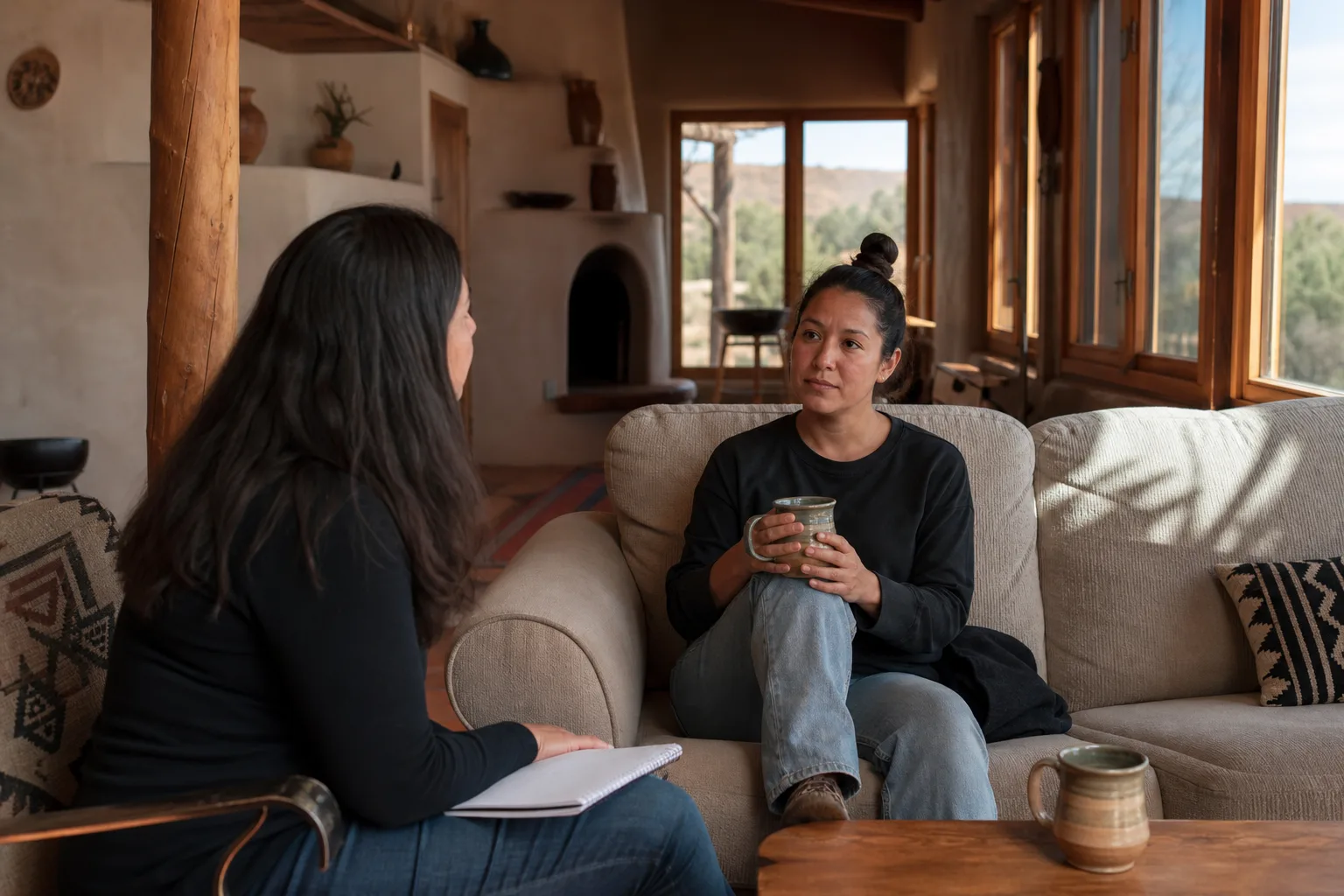
Nar-Anon can be a helpful source of support for families while a loved one is in IOP Albuquerque services for substance use. Family members and close friends often use Nar-Anon to learn about boundaries, coping, and support for themselves during addiction treatment. At Choice Recovery Path in Albuquerque, people exploring outpatient addiction treatment can ask how family support may fit alongside the program’s weekly group and individual therapy, recovery skills work, peer support, and aftercare planning. If a specific family service is needed, the team can also help discuss whether it may be part of care or whether a referral would make sense.
How can Nar-Anon fit with IOP Albuquerque treatment?
When a person starts looking for help for substance use, families often need support too. That is where Nar-Anon may help. Nar-Anon is a peer support option for people affected by someone else’s drug use. At the same time, a loved one may be attending IOP Albuquerque care or another level of outpatient addiction treatment. These supports do different jobs, but they can exist side by side. One is for the family’s well-being, and the other is for the person getting clinical care. Ask about the Choice intensive outpatient program (IOP) and outpatient addiction treatment in Albuquerque.
For many New Mexico families, this matters because addiction affects daily life at home, work, and school. Worry, anger, confusion, and guilt can all build up over time. Nar-Anon does not replace treatment, and treatment does not replace family support. Instead, each can give a different kind of structure. Choice Recovery Path, with offices in Albuquerque and Las Cruces, can talk with individuals and families about starting care and how an intensive outpatient program may fit into a larger support plan.
It can help to think of this as a team effort without forcing everyone into the same role. A loved one in IOP may focus on attendance, honesty, and building safer habits. Family members in Nar-Anon may focus on their own stress, limits, and choices. If you are unsure how family support fits with care, you can call Choice Recovery Path at (505) 526-3649 and ask the admissions or clinical team what is available and whether another referral would make sense.
- Nar-Anon can give family members a place to talk with people who understand.
- IOP can give the person in treatment a structured level of outpatient addiction treatment.
- Families and clients may each need their own support instead of one shared solution.
- It is okay if progress looks different for the loved one and the family.
What does Nar-Anon offer families during outpatient addiction treatment?
Families often spend a lot of energy trying to predict what will happen next. They may hide problems, argue about money, check phones, or stay awake waiting for someone to come home. Nar-Anon offers a place to step back from that cycle. People can listen, share if they want to, and learn from others who have lived with similar stress. This kind of support can be especially helpful while a loved one is in outpatient addiction treatment and household routines are beginning to change.
Nar-Anon is not medical care and it is not a substitute for an evaluation. It is a peer setting centered on family recovery, not on controlling another person’s choices. That can be a relief for people who feel responsible for fixing everything. While a loved one attends an intensive outpatient program in Albuquerque, family members may use Nar-Anon to work on calm communication, healthier boundaries, and day-to-day stability. If a family also has concerns about depression, anxiety, or another mental health issue related to substance use stress, they can ask a healthcare professional for guidance.
Some families worry that getting their own support means giving up on the person they love. In many cases, it means the opposite. It can mean learning how to care without chasing, rescuing, or covering up harm. Nar-Anon can give families language for that balance while the treatment team focuses on the client’s recovery plan.
- A regular place to talk or listen without pressure
- Support from people affected by another person’s substance use
- Ideas for setting limits around money, rides, or crisis calls
- A reminder that family members also need rest and support
Addiction Treatment and IOP at Choice Recovery Path
Choice Recovery Path offers addiction treatment in Albuquerque, New Mexico for adults who want structured support while living at home. Its intensive outpatient program (IOP) in Albuquerque brings weekly group and individual therapy, early recovery skills, and practical tools for change into daily life.
- What IOP looks like: regular group work and one-to-one therapy, with peer support, life skills, medical provider support and medication-assisted treatment that may be part of care.
- Who it is for: adults who need more structure than standard outpatient care, people stepping down from inpatient or residential treatment, and people starting care in the community.
- Schedule: sessions fit around work and home life. Call for the current IOP schedule, program length and openings.
Call (505) 526-3649, verify your insurance, or start admissions to ask whether IOP or outpatient addiction treatment fits your needs.
For the full overview, start with Nar-Anon Meetings In New Mexico. Related reading: Nar-Anon And Addiction Treatment Albuquerque, When Families Need Treatment Beyond Nar-Anon.
How can families support a loved one in IOP without taking over?
When someone enters IOP Albuquerque care, families may feel hopeful and scared at the same time. It is common to want constant updates or to push for fast change. But treatment tends to work best when the person in care takes responsibility for their own participation. Family members can support that process without becoming the monitor, manager, or enforcer. A helpful question is not, “How do I make recovery happen?” but, “How do I respond in a steady and healthy way?”
One practical step is to ask the person what kind of support they want that is realistic and respectful. Maybe they need help with childcare, rides, or a quiet evening after program hours. Maybe they need less arguing and fewer surprise checks. Families can also ask Choice Recovery Path’s admissions or clinical team whether family education, family communication guidance, or other supports are available through the program or by referral. It is important not to assume every service is offered, but it is always reasonable to ask.
It also helps to notice signs that the family itself is under strain. Sleep problems, panic, sadness, or constant conflict can wear people down. Sometimes substance use and mental health concerns happen together, which is often called co-occurring issues. Family members should not try to diagnose a loved one or themselves, but they can seek professional advice if they are worried. If anyone is in immediate danger, call 911. For mental health or emotional crisis support, call or text 988.
- Encourage attendance and personal responsibility without policing every move.
- Offer practical help only if it does not put you or others at risk.
- Use calm, brief communication instead of late-night arguments.
- Keep emergency numbers handy: 911 for immediate danger and 988 for crisis support.
- Get your own support instead of relying only on the person in treatment.
What conversations are helpful when Nar-Anon and IOP are happening at the same time?
Families do not need perfect words, but they do need honest ones. A simple, steady tone often works better than emotional speeches. During IOP or other outpatient addiction treatment, many people are already dealing with shame, fear, and change. Family conversations may go better when they focus on what each person will do rather than what they hope to force someone else to do. Nar-Anon can help family members practice that shift.
It may also help to agree on a few basics. For example, decide how you will handle money requests, missed obligations, or contact after an argument. These decisions can reduce chaos and lower the pressure on every conversation. If there are children in the home, adults should think ahead about safety, routine, and what information is appropriate to share. If a family needs more support around communication, they can ask Choice Recovery Path whether family-related services are available or whether a referral would be a better fit.
| Situation | Helpful response |
|---|---|
| A loved one misses a session | Ask what their next step is instead of starting a long argument. |
| They ask for money unexpectedly | Pause, stick to your boundary, and offer a non-cash option only if it feels safe. |
| You feel overwhelmed | Reach out to Nar-Anon support or another trusted support person before reacting. |
| There is a safety concern | Call 911 for immediate danger or 988 for a mental health or emotional crisis. |
When should a family seek more help in Albuquerque or Las Cruces?
Sometimes Nar-Anon and a loved one’s treatment routine are not enough to address what is happening at home. If there is violence, threats, unsafe driving, overdose risk, severe withdrawal concerns, or fear that someone may harm themselves or others, emergency help matters more than keeping the peace. Call 911 for immediate danger. If someone is in a mental health or emotional crisis and you need urgent support, call or text 988. Families should not wait for a better time when safety is already at risk.
There are also times when the issue is not an emergency, but the family still needs more guidance. Maybe the person in treatment keeps dropping out, or maybe a relative is so anxious or depressed that daily life is getting harder. Because substance use and mental health concerns can overlap, a full picture may take time. Families can ask about an evaluation for treatment needs, ask what level of care may fit, and ask whether an intensive outpatient program or another outpatient addiction treatment option is appropriate.
Choice Recovery Path serves people in Albuquerque and Las Cruces, New Mexico. If you are not sure where to begin, a first step can be a phone call to ask practical questions about admission, scheduling, and what support may be available for families. Clear information does not solve everything, but it can make the next step feel more manageable. Even when recovery feels uncertain, families do not have to sort through it alone.
- Call 911 if there is immediate danger, a medical emergency, or violence.
- Call or text 988 for urgent mental health or emotional crisis support.
- Ask about an evaluation if substance use is affecting work, family, or safety.
- Reach out sooner rather than later if the whole household is under stress.
Ready to talk through next steps? Call Choice Recovery Path at (505) 526-3649 or explore IOP at Choice Recovery Path and Choice addiction treatment services.
Frequently Asked Questions
Do families need to attend the same program as their loved one?
Not usually. A loved one may attend an intensive outpatient program while family members choose Nar-Anon or another support path for themselves. Different people in the same family may need different kinds of help at the same time.
Can Nar-Anon replace professional treatment for substance use?
No. Nar-Anon is peer support for family members and close friends affected by someone else’s substance use. It does not replace an evaluation, outpatient addiction treatment, IOP, or emergency care when those are needed.
What if my loved one does not want family involved?
That can be painful, but families can still seek support for themselves. Nar-Anon may help you focus on your own well-being, boundaries, and next steps even if your loved one is not ready to include family in treatment-related conversations.
How do I know if IOP might fit instead of another level of care?
That decision should come from a proper evaluation, not guesswork. You can contact Choice Recovery Path to ask about the admission process, what outpatient addiction treatment options may be available, and whether another referral would make more sense.
How can Nar-Anon fit alongside IOP?
Nar-Anon is separate from IOP, but some families use it as added support while a loved one attends treatment. It can give relatives and close friends a place to talk about boundaries, stress, and coping while the person in care focuses on recovery needs. At Choice Recovery Path, you can ask how family support may fit with the treatment plan.
Can family support be part of addiction treatment?
Family support may be an important part of addiction treatment for some people, depending on their needs and situation. At Choice Recovery Path, you can ask whether family involvement is part of care and how it may work alongside outpatient services. If a different type of support is needed, you can also ask whether a referral may be a good fit.
Sources
- SAMHSA: www.samhsa.gov/families
- SAMHSA: www.samhsa.gov/find-support/learn-about-treatment/types-of-treatment
- National Institute on Drug Abuse (NIH): nida.nih.gov/research-topics/comorbidity
- Nar-Anon Family Groups: www.nar-anon.org
Call (505) 526-3649 to talk through next steps.