
Accessible Outpatient Rehab Accommodations In NM
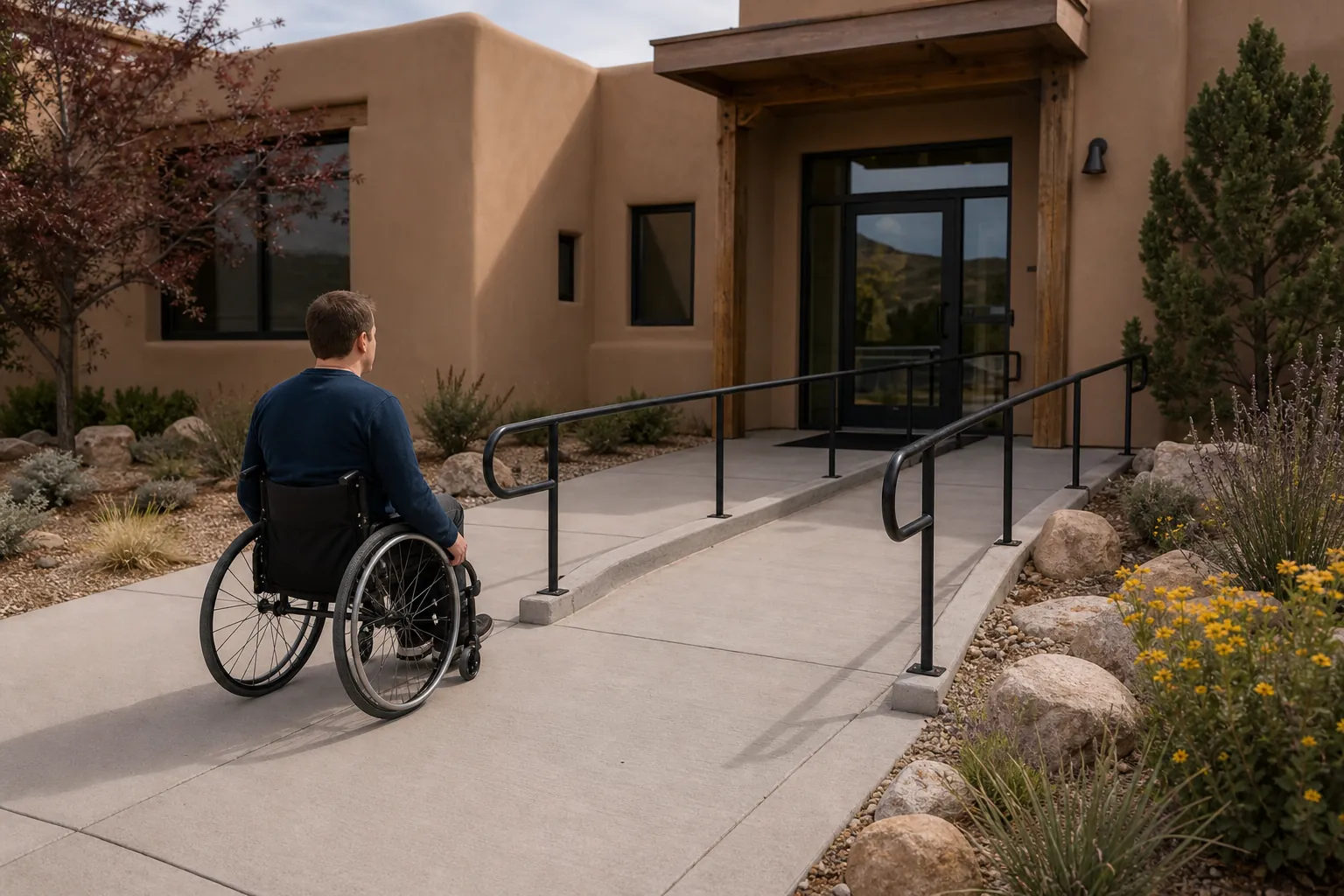
Outpatient rehab accessibility accommodations are adjustments that may help a person take part in addiction care, such as communication support, accessible spaces, or scheduling discussions. Availability varies by program, so describe the barrier and ask admissions what can be arranged at the Albuquerque or Las Cruces location before choosing care.
What Are Outpatient Rehab Accessibility Accommodations?
Outpatient rehab accessibility accommodations are practical changes or supports that may reduce barriers to participating in treatment. The right approach depends on a person’s needs and the program’s setting, so ask about specific options rather than assuming an accommodation is available.
Accessibility can involve more than getting into a building. A person may need information in a different format, communication support, a way to discuss mobility needs, or help understanding how an outpatient schedule fits with other responsibilities. The first step is to identify what makes attendance or participation difficult.
Choice Recovery Path offers outpatient addiction care and an intensive outpatient program, or IOP, in Albuquerque and Las Cruces. The available arrangements can differ by location and program, so admissions is the right place to confirm details. The New Mexico dual diagnosis outpatient care guide can also help explain how outpatient support fits into broader treatment planning.
It can help to describe the access need in practical terms without feeling required to share more personal information than necessary. For example, explain what part of attending, communicating, or taking part in sessions may be a barrier, then ask what the program can discuss or arrange.
Think About Access Before Enrollment
A conversation before enrollment can help identify questions that might otherwise surface after treatment begins. Consider the full experience, including reaching the location, entering the space, receiving information, participating in sessions, and staying in contact with the program. Ask which details can be confirmed before making a decision.
Distinguish a Need From a Promise
An example of a possible accommodation is not a promise that a specific program can provide it. Staff may need to clarify what is available, what requires advance planning, or whether another referral is more appropriate. Keep a written record of what you were told and whom to contact with follow-up questions.

How Can You Describe Your Accessibility Needs?
Describe the specific barrier, the part of treatment it affects, and what kind of support might help you participate. You do not need to arrive with a formal label or a fully developed accommodation plan, but sharing practical details gives admissions a clearer starting point.
A useful description focuses on function rather than assumptions about what a program should provide. You might explain that stairs, background noise, written materials, or a particular time of day create difficulty, then ask what options can be discussed. If you are unsure what would help, say so and request a conversation about possible approaches.
You can ask whether information about your access needs can be shared only with people involved in planning your care, and how the program handles sensitive information. Avoid assuming that every detail will remain private in every circumstance. Ask admissions to explain the program’s process and any limits that may apply.
If you are helping a family member, ask how they want you involved before sharing personal details on their behalf. A person seeking care can decide what to disclose and who may take part in planning, subject to the program’s policies. SAMHSA’s family resources may offer general context for supportive involvement.
- Explain which part of attending or participating creates the greatest barrier.
- Share what has helped in other settings, if you feel comfortable doing so.
- Ask whether the proposed support can be confirmed before you enroll.
- Clarify whom to contact if your needs change after treatment begins.

What Accessibility Details Should You Ask Admissions About?
Ask admissions about the specific location, program, and support you would use, because access arrangements may not be identical across services or sites. Clear questions can help you understand what is currently available, what needs advance coordination, and whether a referral should be considered.
Choice Recovery Path serves people through outpatient care and IOP at its Albuquerque and Las Cruces locations. Ask about the location you would attend rather than relying on a general answer about the organization. Confirm details such as entry, the spaces used for services, communication options, and any process for requesting changes.
It is also reasonable to ask how access needs are considered during intake and whether you can speak with someone about a concern before committing to a program. The admissions team can explain what is within the program’s scope. If a requested service is not available, ask whether staff can discuss other resources or a referral.
For help framing practical questions about intensive versus standard outpatient care, see how IOP compares with standard outpatient treatment. The level of care discussion should remain separate from the access discussion: a schedule or service structure may affect whether participation is workable, but it does not by itself resolve every accessibility need.
- Which accessibility features can I confirm at the location I would attend?
- How should I request communication or participation support before starting?
- Can I discuss an access concern with admissions before an intake appointment?
- What options can we discuss if the program cannot meet a particular need?
| Access topic | What to describe | What to confirm |
|---|---|---|
| Getting into the space | Mobility or entry barrier | Route and room access |
| Communication | Preferred way to receive information | Available formats or support |
| Taking part | Sensory or interaction concern | Possible participation adjustments |
| Attendance | Timing or transportation barrier | Program requirements and options |
How Do Accessibility Needs Relate to IOP and Outpatient Care?
Accessibility needs should be considered alongside the structure of outpatient care and IOP, because attendance expectations and service intensity can affect whether a person can participate. A clinical team can discuss an appropriate level of care, while admissions can clarify program details and access questions.
Outpatient care and IOP are not interchangeable in every situation. They differ in structure and intensity, and a person’s needs should guide a discussion with qualified treatment professionals. Ask how attendance expectations, session participation, and any required activities work in the program you are considering.
A person may find one schedule more manageable than another because of mobility, work, caregiving, transportation, fatigue, or communication needs. That does not mean one option is automatically suitable. Discuss the factors that affect participation with the clinical team, and ask admissions to explain the program’s actual requirements.
Outpatient services are distinct from detox, residential treatment, and partial hospitalization. Those levels may be discussed as education or referral context, but Choice Recovery Path’s stated services are outpatient treatment and IOP. SAMHSA and the ASAM Criteria provide general context on treatment types and level-of-care decisions.
| Care type | General structure | Question to discuss |
|---|---|---|
| Outpatient | Treatment while living in the community | What attendance is expected? |
| IOP | More structured outpatient services | Can the schedule work with access needs? |
| Residential | Live-in treatment setting | Would a referral be appropriate? |
| Detox or PHP | Different service and supervision needs | Who can assess or refer? |
How Can You Plan for Transportation, Scheduling, and Communication?
Plan for the practical steps that make attendance possible, including travel, timing, reminders, and understanding program information. Explain which barriers are most important and ask what requirements apply, since transportation help, schedule flexibility, or communication supports should never be assumed.
Transportation can affect whether a person can attend consistently, even when the treatment itself seems like a fit. Consider how you would get to the Albuquerque or Las Cruces location and whether travel time, transfers, mobility, or cost create a barrier. Ask admissions whether the program has information about local resources, without assuming it provides transportation.
Ask about the schedule and attendance expectations before deciding whether a program can fit with work, caregiving, medical appointments, or energy limits. Do not rely on an informal estimate of how often you might need to attend. Request the current requirements for the specific service and ask how to report a conflict or absence.
Communication needs matter before and during treatment. If phone calls, printed materials, online messages, or group discussions are difficult for you, ask what alternatives or supports can be discussed. If you prefer another person to help with reminders or planning, clarify whether and how that person can be included.
- Identify the travel, timing, or communication barrier that could disrupt attendance.
- Ask admissions for the current requirements for the location and service you are considering.
- Discuss possible options without assuming that a particular support is available.
- Confirm any agreed next steps and whom to contact if circumstances change.
What If an Outpatient Program Cannot Meet an Access Need?
If an outpatient program cannot meet a particular access need, ask what alternatives, referrals, or additional planning may be possible. A limitation does not mean a person should abandon the search for care; it means the next step is to identify a setting that can address both treatment needs and practical access barriers.
Ask admissions to explain the limitation in concrete terms and whether it applies to the location, the service, or a specific activity. A different arrangement may be possible, but do not assume that it will be. If the program cannot provide the support you need, ask whether staff can suggest a referral or another way to locate treatment.
SAMHSA’s FindTreatment.gov is a resource for locating licensed treatment and comparing facilities. You can use it alongside a conversation with a clinical professional, rather than treating a directory listing as confirmation that a provider can meet a specific access need. Contact a program directly to ask about its current services and arrangements.
A care team may determine that a different level of care or referral is appropriate based on clinical needs. Choice Recovery Path provides outpatient treatment and IOP, not onsite detox, residential treatment, or PHP. For context on transition planning after a residential stay, see outpatient care after residential treatment.
How Should You Prepare for an Accessibility Conversation?
Prepare a short description of your access needs, the questions you want answered, and any details that could affect attendance or participation. You do not need to solve every issue in advance; a focused conversation can help clarify what the program can confirm and what needs further discussion.
Before contacting admissions, note the location and service you are asking about, along with the specific barrier you want to discuss. If you have documents that explain a need, ask whether they are useful rather than assuming they are required. Share only information you are comfortable discussing and ask how any requested details will be used.
It may help to bring a support person, interpreter, or advocate if you want one involved, but confirm in advance whether and how that person can participate. Keep questions focused on access, program expectations, and next steps. If you receive an answer that is unclear, ask for it to be explained in plain language.
People with co-occurring mental health and substance use concerns may need to discuss how access needs affect both kinds of support. Ask the clinical or admissions team how those topics are considered within the services available. For a broader overview of outpatient planning, visit New Mexico outpatient substance use care.
- Write down the main barrier and how it affects treatment participation.
- Bring questions about the location, service expectations, and communication process.
- Ask whether a support person may join the conversation if you want assistance.
- Record confirmed next steps and follow up if an answer remains unclear.
Questions about next steps? Call Choice Recovery Path at (505) 526-3649 or review the Choice intensive outpatient program.
Frequently Asked Questions
Do I need a diagnosis or formal paperwork to ask about accommodations?
You can ask about an access need without assuming that a diagnosis or specific document is required. Admissions can explain what information, if any, is needed to consider a request. Describe the barrier and ask what the program’s process involves before gathering or sharing additional records.
Can I ask about accessibility before completing an intake?
Yes. Contacting admissions before intake can help you understand location access, program expectations, and whether a requested support can be discussed. Ask which details can be confirmed in advance and whether another conversation is needed with a clinical team member.
Can a family member discuss accessibility on someone else’s behalf?
A family member can ask general questions about program access, but personal information and care planning may require the person’s involvement or permission. Ask the person seeking treatment how they want you involved, then ask admissions what the program allows for communication and support.
Does asking about an accommodation guarantee that it will be provided?
No. Asking opens a conversation, but the program must confirm what it can provide for the specific service and location. Request a clear explanation of any available options, limits, and next steps, and consider asking about referrals if the program cannot address a significant barrier.
What should I do if my access needs change after treatment starts?
Tell the appropriate program contact as soon as you can and explain what has changed and how it affects participation. Ask whether the care plan, communication approach, or practical arrangements can be reviewed. A change in needs may also warrant a discussion with the clinical team.
Sources
- FindTreatment.gov, SAMHSA
- Substance Use Treatment, SAMHSA
- The ASAM Criteria, American Society of Addiction Medicine
Call (505) 526-3649 to talk through next steps.