
Sharing in addiction group therapy: finding your voice at your own pace

Walking into an addiction therapy group can bring up questions before anyone speaks. What should you say? How much detail is appropriate? Will other people understand? If you are considering treatment in New Mexico, these concerns are worth discussing. You do not need a polished recovery story to begin participating.
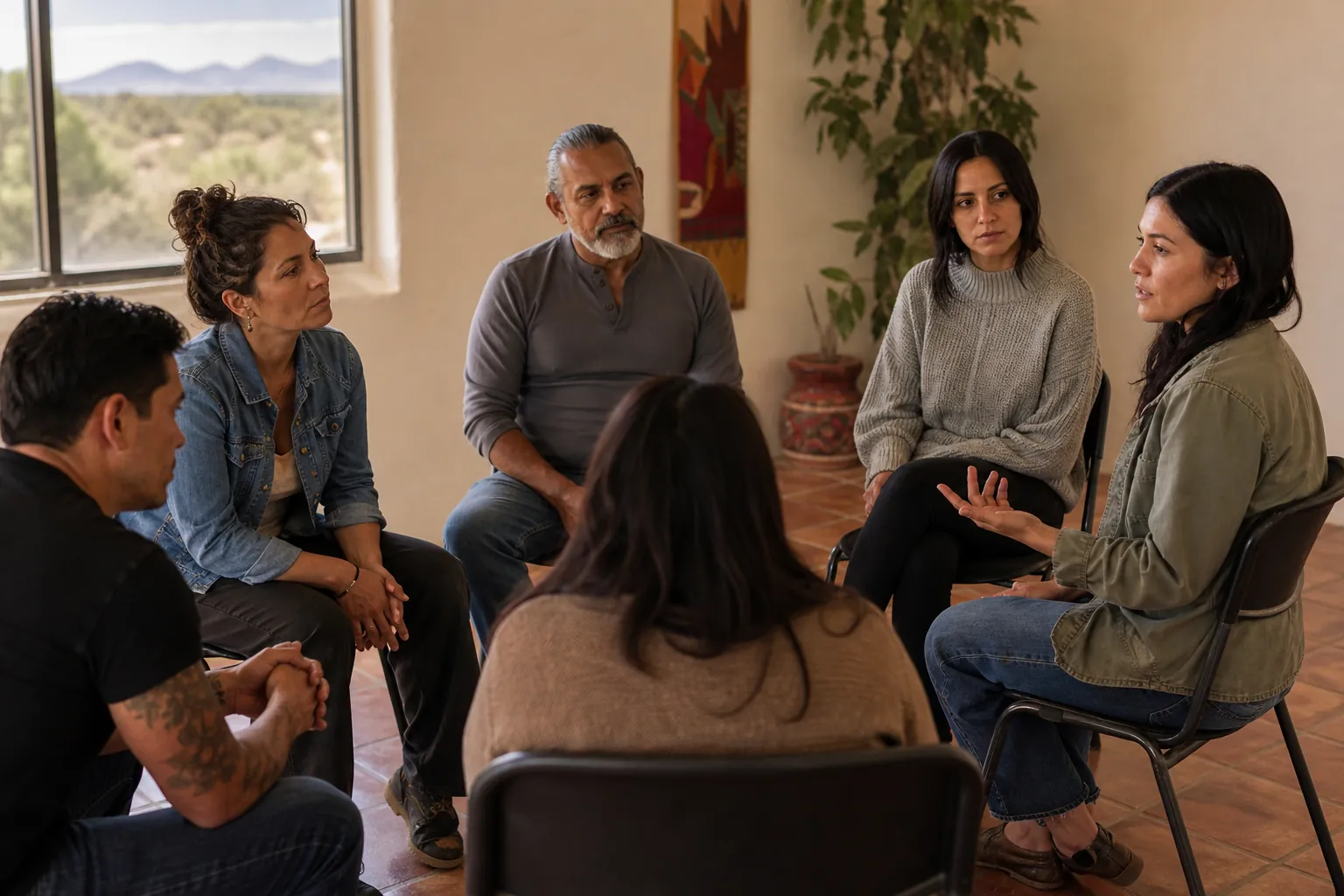
Sharing in addiction group therapy is not a performance or a test of commitment. It is a way to explore experiences, practice communication, and receive support within a structured setting. The goal is not to tell everything. The goal is to share information that helps you understand your needs and take a useful next step.
Choice Recovery Path encourages people exploring treatment to ask about group expectations, privacy, and available support before deciding what feels appropriate. Knowing how a group works can make the first conversation feel less uncertain.
What Sharing In Addiction Group Therapy Can Look Like
Sharing may mean describing a difficult moment, naming an emotion, asking for help, or reporting something that went well. It can be brief. Saying, “I had a craving after work and called someone instead of using,” gives a group plenty to discuss without requiring a detailed personal history.
Different groups have different purposes. A skills-based group may focus on practicing coping strategies. A process-oriented group may explore emotions and relationships. A psychoeducational group may connect information about substance use with participants' daily experiences. Peer support meetings can also involve sharing, but they are not necessarily the same as clinician-led group therapy.
Ask who facilitates the group and what its goals are. Understanding the format helps you decide whether to bring a question, discuss a recent situation, or listen for examples you can apply outside the session.
Participation expectations also vary. Some facilitators invite everyone to check in, while others leave more space for voluntary contributions. Ask whether passing is permitted and how the facilitator supports people who feel overwhelmed.
Why Talking With Others Can Support Recovery
Substance use concerns often come with isolation. You may have hidden your use, avoided conversations, or felt that nobody could understand your situation. Hearing others describe similar struggles can challenge that sense of being alone, even when their backgrounds differ from yours.
Speaking aloud can also help organize an experience. A difficult evening may initially feel like a blur. Explaining what happened can reveal a sequence: poor sleep, an argument, a missed meal, and then a strong urge to use. Recognizing that sequence creates opportunities to respond earlier next time.
Group feedback may offer perspectives you had not considered. Another participant might describe how they handle payday, family gatherings, or long periods alone. Those ideas are not instructions you must follow. They are possibilities to evaluate with your treatment team.
Sharing can provide practice with asking for support and setting boundaries. These skills matter beyond treatment, especially when you need to decline an invitation, explain a recovery goal, or tell someone that a conversation is becoming too stressful. Benefits vary, and group therapy may be one part of a broader treatment plan.

How To Prepare For Your First Share
You do not need to rehearse a speech, but a little preparation can make speaking easier. Choose one recent experience rather than trying to summarize your entire relationship with substances. Focus on what happened, how it affected you, and what you need now.
A simple outline is: “The situation was… I noticed… What I tried was… What I need help with is…” You can write a few notes beforehand if that helps you stay grounded. Ask about the group's rules on bringing written material.
- Choose a topic that connects to your current recovery goals, such as cravings, sleep, stress, or a challenging relationship.
- Decide which details you are comfortable sharing and which details you would rather discuss privately with a clinician.
- Identify whether you want feedback, encouragement, or simply a chance to be heard.
- Plan a short opening sentence so you do not have to find every word in the moment.
- Tell the facilitator beforehand if speaking in groups causes significant anxiety or if you need an accommodation.
You might begin with, “I am nervous about talking, but I want help with what happens when I get home from work.” That sentence gives the group a useful starting point. It also communicates your discomfort without requiring you to hide it.
What To Share And What To Keep Private
A helpful share usually emphasizes feelings, patterns, consequences, and coping choices. Exact amounts, graphic descriptions, or detailed accounts of obtaining substances are often unnecessary. They can distract from the therapeutic purpose and may be difficult for others to hear.
You can describe a craving without naming every detail associated with it. For example, “An old contact reached out, and I felt pulled toward using” communicates the problem while keeping attention on your response and support needs.
You are also allowed to have boundaries around trauma, family conflict, legal matters, and other sensitive experiences. Group therapy does not require you to disclose something before you are ready. A facilitator may help you decide whether an issue is better addressed individually or in another setting.
- You can say, “I want to talk about how this affects me, but I am not ready to explain the background.”
- You can ask, “Could we focus on coping strategies rather than the details of what happened?”
- You can tell the facilitator, “I have something important to discuss privately before I bring it to the group.”
- You can request guidance if you are unsure whether a topic fits the group's purpose.
Boundaries are different from avoiding every difficult conversation. Over time, your clinician can help you explore whether holding back protects your privacy, reflects understandable uncertainty, or keeps you from receiving support you want.
Understanding Confidentiality And Group Agreements
Before sharing sensitive information, ask how confidentiality works. Clinicians have professional and legal responsibilities, but confidentiality has limits that depend on the setting and applicable law. The program should explain those limits and its privacy practices in language you can understand.
Participants are usually asked not to disclose other members' identities or stories outside the group. However, a facilitator cannot guarantee that every participant will honor that agreement. This is an important distinction when deciding what to share.
Ask about recording, social media, contact between members, and what happens if you recognize someone. In a smaller New Mexico community, you may encounter another participant at work, a store, or a community event. A clear agreement about public acknowledgment can reduce uncertainty.
For virtual sessions, ask how to protect privacy at home. Headphones, a private room, and a screen positioned away from others can help, but they do not eliminate every risk. Tell the facilitator if your living situation makes private participation difficult.
If someone repeats your information or behaves disrespectfully, bring the concern to the facilitator. You should not have to manage a privacy problem or ongoing conflict alone.
Managing Anxiety, Shame, Or Strong Emotions
Feeling nervous does not mean group therapy is a poor fit. Speaking about substance use can bring up shame, grief, frustration, or fear of judgment. Start with a manageable topic and let the facilitator know what is happening for you.
Before speaking, notice your feet on the floor and take a comfortable breath. Look at your notes if needed. You can pause between sentences. If a particular grounding exercise increases distress, stop and ask your clinician for another approach.
It may help to describe behavior without turning it into a judgment about your identity. “I missed an appointment after drinking” is more specific and workable than “I always ruin everything.” Specific language leaves room to understand the problem and plan a response.
If emotions become too intense, ask for a pause or follow the group's agreed process for stepping out. Check in with the facilitator before leaving when possible, particularly if you feel unsafe or disoriented. Needing support with regulation is not a failure.
You can also ask about individual sessions or other treatment options if the group format is repeatedly overwhelming. Appropriate care should consider your symptoms, preferences, safety, and ability to benefit, rather than assuming one format works for everyone.
Listening And Responding Without Taking Over
Sharing works best when listening receives equal attention. Another person's story may remind you of your own experience, but immediately shifting the conversation to yourself can leave them feeling unheard. Give them space to finish and follow the facilitator's guidance about responses.
Speak from your own experience rather than telling someone what they must do. “Calling my support person helped me” leaves room for different needs. “You just need to call someone” can oversimplify a situation and sound dismissive.
- Ask whether someone wants feedback before offering suggestions, if that fits the group's rules.
- Acknowledge the effort involved in sharing without comparing whose experience was harder.
- Avoid diagnosing other members or giving instructions about medication, detox, or medical care.
- Respect differences in recovery goals, culture, beliefs, and personal circumstances.
- Keep your response brief enough that other people have time to participate.
Disagreement can happen without making the group unsafe. If a comment feels judgmental, you can say how it affected you and ask for clarification. The facilitator should help maintain respectful discussion and redirect advice or behavior that does not support the group's purpose.
Sharing About Cravings, Setbacks, And Medication
Some of the hardest topics to discuss are the ones most relevant to your current safety. You may worry that admitting a craving or a return to use will disappoint others. Bringing it up can help your treatment team understand what support needs to change.
A useful share might include when the urge started, what was happening beforehand, what you did, and what would help now. If substance use occurred, you can focus on immediate needs and patterns rather than offering an exhaustive account. Ask the facilitator how to handle details appropriately.
Group discussion is not a substitute for medical assessment. Stopping alcohol or certain sedatives suddenly can cause dangerous withdrawal. If you have concerns about withdrawal, intoxication, overdose risk, or medication interactions, contact a qualified medical professional promptly rather than waiting for the next group session.
Prescribed medications for substance use disorders are evidence-based treatment options for some people. You do not need to defend your treatment to other members. Medication decisions belong with qualified clinicians who understand your health history and goals.
If a setback raises urgent safety concerns, tell the facilitator directly. For a suspected overdose or another medical emergency, call 911. In the United States, call or text 988 for a suicide or mental health crisis. A routine group session is not emergency care.
Making Group Participation Work In New Mexico
Access to treatment can be shaped by distance, transportation, work schedules, childcare, and reliable internet. These practical concerns may affect how consistently you can attend and how comfortable you feel participating. Discuss them early instead of assuming you must solve everything alone.
Ask a prospective program about session schedules, attendance requirements, costs, insurance questions, and whether in-person or virtual options are available. Availability varies by provider. Also ask what happens if weather, travel, or a work obligation prevents you from attending.
Cultural background and language can influence what feels respectful or safe to share. New Mexico communities include many different traditions, identities, and experiences. You can ask how a program addresses language access, cultural concerns, and experiences of discrimination without expecting to speak for an entire community.
If privacy is a concern because you know other participants, discuss it with the program before joining. The right questions can help you evaluate fit while protecting information you are not ready to disclose.
Turning A Group Conversation Into A Next Step
A meaningful session does not have to end with a major breakthrough. One practical action may be enough. After the group, identify something you learned about a trigger, a boundary, or a support need, then decide how to apply it.
For example, if sharing helped you notice that cravings increase when you skip meals, your next step might be planning food before a long shift. If family pressure came up, you might practice a brief response with your clinician before an upcoming visit.
Track progress through behavior rather than how much you disclose. Asking for help sooner, listening without interrupting, attending consistently, or naming an emotion can all represent movement toward your goals. You do not need to become the most talkative person in the room.
If you are exploring addiction treatment in New Mexico, call Choice Recovery Path at (505) 526-3649 to ask about treatment options and how group participation may fit your needs. You can begin by explaining what concerns you about sharing. A thoughtful conversation can help you decide on an appropriate next step.
Call (505) 526-3649 to talk through next steps.