
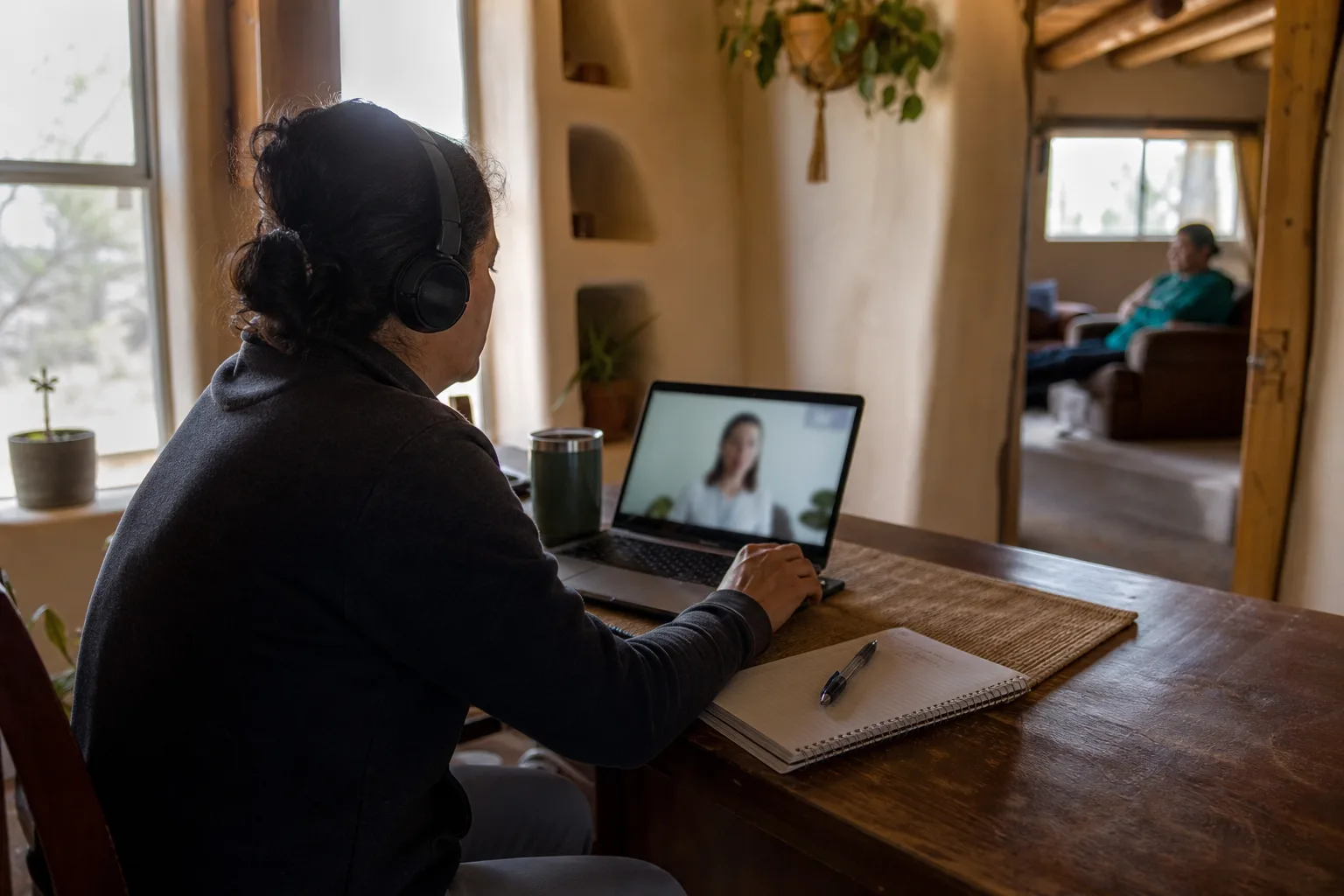
Telehealth CBT treatment New Mexico may be something adults ask about when looking for addiction treatment that works with busy schedules, transportation barriers, or privacy concerns. In Choice Recovery Path’s outpatient addiction treatment and intensive outpatient program in Albuquerque, care can include weekly group and individual therapy, early recovery skills, peer support, medical provider support and medication-assisted treatment, life skills, and aftercare planning. If you are exploring telehealth CBT treatment New Mexico, you can ask the admissions or clinical team whether it is part of your care needs or whether another service or referral may be a better fit. Calling for the current schedule can also help you understand available program options.
What is telehealth CBT treatment in New Mexico, and who may look for it?
Telehealth CBT treatment New Mexico means meeting with a licensed treatment provider by secure video or phone for care that uses cognitive behavioral therapy principles. CBT focuses on everyday patterns: what happens before substance use, what thoughts show up, how emotions affect choices, and what actions may help in the moment. In addiction treatment, this can be part of a broader care plan that also looks at safety, support at home, relapse risk, and mental health concerns that may happen alongside substance use. Ask about the Choice intensive outpatient program (IOP) and outpatient addiction treatment in Albuquerque.
People often start looking for remote care when getting to an office feels hard. In New Mexico, long drives, weather, caregiving duties, work hours, and concern about privacy can all make in-person treatment harder to manage. Telehealth may lower some of those barriers. It can also help families stay more involved when they live in different places or when a loved one needs support without adding more travel stress.
Remote care is not the right fit for every situation, and it is not a replacement for emergency help. If someone is at immediate risk of harming themselves or others, is having a medical emergency, or cannot stay safe, call 911 right away. For a mental health or substance use crisis, call or text 988 for immediate support and guidance.
- Adults balancing treatment with work, school, or parenting
- People living far from an office or without reliable transportation
- Those who want more privacy while seeking support
- Families trying to stay involved across distance
How can CBT support substance use recovery when care is remote?
CBT is often used to help people notice patterns that keep them stuck. In the context of substance use, that may include stress after work, conflict at home, loneliness, shame, boredom, or the belief that using is the only way to cope. A telehealth session can give space to slow those moments down, talk through them, and practice more useful responses. The goal is not perfection. The goal is to build awareness and repeatable skills that can be used in real life.
When substance use happens alongside anxiety, depression, trauma-related stress, or other mental health concerns, treatment may need to address both at the same time. Federal health sources note that mental health conditions and substance use can occur together, and treatment planning should consider the whole person. Telehealth CBT may be one part of that support. If you are not sure what kind of care is needed, ask the admissions or clinical team for guidance rather than trying to sort it out alone.
Because telehealth happens in the setting where real-life triggers show up, some people find it easier to talk about what is actually happening day to day. A provider may help a person identify warning signs, challenge all-or-nothing thinking, and plan small steps for the next week. Families may also learn ways to respond with steadiness instead of panic, blame, or constant monitoring.
- Identifying triggers, high-risk situations, and warning signs
- Practicing coping skills before cravings or stress peak
- Challenging thoughts that feed hopelessness or impulsive use
- Making practical plans for work, home, sleep, and support
Addiction Treatment and IOP at Choice Recovery Path
Choice Recovery Path offers addiction treatment in Albuquerque, New Mexico for adults who want structured support while living at home. Its intensive outpatient program (IOP) in Albuquerque brings weekly group and individual therapy, early recovery skills, and practical tools for change into daily life.
- What IOP looks like: regular group work and one-to-one therapy, with peer support, life skills, medical provider support and medication-assisted treatment that may be part of care.
- Who it is for: adults who need more structure than standard outpatient care, people stepping down from inpatient or residential treatment, and people starting care in the community.
- Schedule: sessions fit around work and home life. Call for the current IOP schedule, program length and openings.
Call (505) 526-3649, verify your insurance, or start admissions to ask whether IOP or outpatient addiction treatment fits your needs.
For the full overview, start with CBT Treatment In Outpatient Recovery. Related reading: What Happens In A CBT Session For Addiction, CBT Treatment Plan Goals For Substance Use.
What does a telehealth CBT visit usually involve?
A first contact usually starts with questions about what is bringing you in, how substance use is affecting daily life, and whether there are mental health concerns happening at the same time. The treatment team may ask about safety, physical health, past treatment, medications, living situation, and what kind of support you have. This helps them understand whether outpatient care, intensive outpatient care, another service, or a referral may be the best fit.
Once care begins, telehealth CBT sessions often focus on current problems instead of vague advice. You might review a recent urge to use, a conflict, or a hard day at work and break it into parts: what happened, what you thought, how you felt, what you did, and what you might try next time. Some people also keep notes between sessions, practice coping steps, or track patterns in sleep, mood, stress, and substance use to bring back to treatment.
For many adults, privacy matters. A telehealth visit works best when you can meet from a quiet place, use headphones if needed, and have a backup plan if the connection drops. If privacy at home is hard, it may help to sit in a parked car, use a private room at work during a break, or ask the treatment team about ideas that protect confidentiality while staying practical.
- A private space with fewer interruptions
- A charged phone, tablet, or computer and stable internet
- Headphones for better privacy
- A notebook for questions, plans, or coping reminders
| Topic | How it may help |
|---|---|
| Cravings and triggers | Helps identify what leads up to use and what to try instead |
| Stress and mood | Builds coping steps for anxiety, sadness, anger, or overwhelm |
| Routines and structure | Supports sleep, meals, work, and daily habits that affect recovery |
| Family communication | Improves planning, boundaries, and support at home |
Is telehealth a good fit if distance, work, or privacy are getting in the way?
For many New Mexico families, treatment is not avoided because they do not care. It is avoided because life is complicated. A long commute from a rural area, shift work, child care needs, elder care, or worry about being seen entering a clinic can all make support feel out of reach. Telehealth can remove some of that strain. Instead of spending hours on the road, a person may be able to meet during a lunch break, before work, or after getting children settled.
That said, convenience alone does not decide whether telehealth is the best option. Some people do better with in-person structure, especially if home is chaotic, internet access is unreliable, or distractions make it hard to focus. Others may need a higher level of support because of withdrawal risk, unstable housing, severe symptoms, or safety concerns. A careful screening can help sort out what is realistic, safe, and useful right now.
If you are considering Choice Recovery Path in Albuquerque or Las Cruces, you can ask the admissions or clinical team whether remote options are available, how they decide who is a fit for outpatient or intensive outpatient care, and whether a referral makes more sense for your situation. A thoughtful answer is a good sign that the focus is on matching care to need, not forcing one path for everyone.
- Distance from Albuquerque or Las Cruces offices
- Work schedule, caregiving, and transportation barriers
- Need for privacy at home or in the community
- Whether home is calm enough for regular sessions
- Whether safety concerns call for a different level of care
How can families support someone using remote CBT-based addiction treatment?
Families often want to help but are not sure what actually helps. A steady, calm approach usually does more good than lectures, threats, or trying to control every move. If your loved one is in telehealth treatment, support can be practical: help protect the session time, reduce interruptions, and encourage follow-through with the care plan. It also helps to listen for stress, isolation, or hopelessness without jumping straight into arguments about trust.
You do not need to become the therapist. In fact, taking over that role can strain the relationship. Instead, families can ask simple questions: “What would make this week easier?” “Do you want a ride to a lab or appointment?” “Would it help if I took the kids during your session?” If conflict is high, ask the treatment team whether family involvement is available or whether a referral for family support would fit. Availability can vary, so it is best to ask directly.
Safety still comes first. If a person talks about suicide, cannot be awakened, seems severely confused, has trouble breathing, or may be having a medical emergency, call 911 immediately. If there is an urgent emotional or substance use crisis and you need immediate guidance, call or text 988. Families deserve support too, especially when co-occurring mental health and substance use concerns are affecting the whole household.
- Protect time and privacy for appointments
- Offer practical help instead of constant pressure
- Notice warning signs and take safety concerns seriously
- Use 988 or 911 when a crisis becomes urgent
Ready to talk through next steps? Call Choice Recovery Path at (505) 526-3649 or explore IOP at Choice Recovery Path and Choice addiction treatment services.
Frequently Asked Questions
Can I do telehealth treatment if I live in a rural part of New Mexico?
Possibly. Remote treatment can be helpful for people who live far from an office, but a provider still needs to make sure the level of care fits your needs and that you can attend reliably and privately enough to benefit. If internet or phone access is inconsistent, ask the admissions or clinical team about options and backup plans.
Does telehealth CBT mean I will only talk about my thoughts?
No. CBT is practical and often focuses on daily routines, stress, triggers, coping skills, and what happened before and after substance use. In addiction treatment, it is usually part of a broader plan that may also include safety planning, recovery support, and attention to co-occurring mental health concerns.
What if I am not sure whether I need outpatient or intensive outpatient care?
That is a common question, and it is one reason an intake screening matters. The treatment team can ask about your substance use, home situation, mental health concerns, safety, and daily functioning to help decide whether outpatient, IOP, another service, or a referral may be more appropriate.
Can family members join remote treatment sessions?
Sometimes family involvement can be part of care, but it depends on the treatment plan, the person’s consent, and what the program offers. If family support seems important, ask the admissions or clinical team whether it is available or whether another referral would better meet that need.
Can IOP include telehealth CBT treatment New Mexico options?
An IOP can involve a mix of services that support recovery while you continue living at home. If you are interested in telehealth CBT treatment New Mexico, ask Choice Recovery Path whether that approach is part of your care plan or whether another service or referral may fit your needs better.
How does telehealth CBT treatment New Mexico relate to addiction treatment?
Telehealth CBT treatment New Mexico is a topic some people explore when they want structured support that may be easier to access from home. In addiction treatment, it may be discussed alongside services such as group and individual therapy, early recovery skills, peer support, medical provider support, medication-assisted treatment, life skills, and aftercare, depending on individual needs and program availability.
Sources
- SAMHSA: www.samhsa.gov/substance-use/treatment
- SAMHSA: www.samhsa.gov/find-support/learn-about-treatment/types-of-treatment
- National Institute on Drug Abuse (NIH): nida.nih.gov/research-topics/comorbidity
- SAMHSA: www.samhsa.gov/mental-health/988
Call (505) 526-3649 to talk through next steps.