
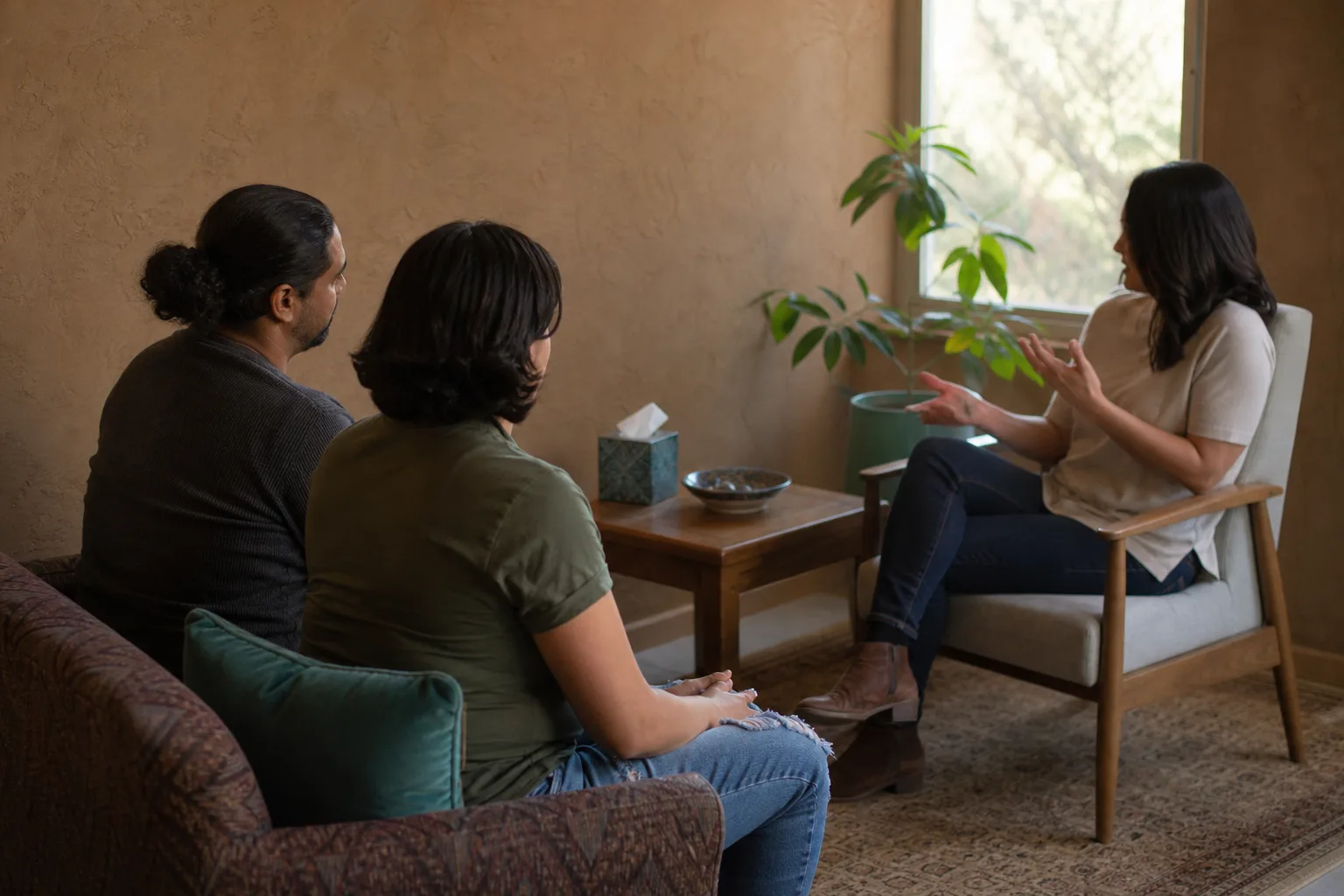
Therapy for relationships can be an important part of addiction treatment because substance use often affects trust, communication, routines, and emotional safety at home. In Choice Recovery Path’s Albuquerque IOP, recovery support may include space to talk about relationship stress, practice healthier boundaries, and build skills for more stable daily life. Therapy for relationships is not about assigning blame; it can help adults focus on honest communication, accountability, and support for recovery. If relationship concerns are affecting treatment, you can ask whether they can be addressed in your care plan or whether a referral may be appropriate.
What is relationship therapy in recovery?
Relationship therapy in recovery is a structured way to work on how people talk, listen, solve problems, and handle stress while substance use is being addressed. For some people, that may involve a spouse or partner. For others, it may involve a parent, adult child, sibling, or another important support person. The focus is not on deciding who is right or wrong. The focus is on patterns that may be making recovery harder and on building safer, steadier ways to relate. Ask about the Choice intensive outpatient program (IOP) and outpatient addiction treatment in Albuquerque.
Recovery can change a relationship in real time. A person may be trying to stay sober while also facing hurt feelings, broken routines, money stress, or fear about the future. Loved ones may want to help but not know how. Therapy for relationships gives everyone a place to slow down, speak clearly, and understand what support looks like now. It can be one part of a broader treatment plan for substance use, especially when home life strongly affects a person’s ability to follow through with recovery goals.
This kind of support does not mean every relationship should stay the same. Sometimes the healthiest step is stronger boundaries, time apart, or a careful plan for contact. A counselor can help people talk through those choices without pressure. At Choice Recovery Path in Albuquerque and Las Cruces, adults and families can ask the admissions or clinical team whether relationship-focused support is available in outpatient care or whether a referral may fit their needs.
- It may include a partner, family member, or another support person.
- It often focuses on communication, trust, boundaries, and daily routines.
- It can be part of outpatient addiction treatment when relationships affect recovery.
- It is meant to support safety and stability, not force reconciliation.
Why do relationships matter so much during recovery?
Substance use can affect more than one person. It may lead to arguments, secrecy, missed responsibilities, or confusion about what to expect from one day to the next. Even when someone is working hard to change, loved ones may still feel guarded. That does not mean progress is not happening. It means relationships often need their own healing process alongside recovery. Therapy for relationships can help people name what has happened and begin practicing more reliable ways of showing up for each other.
Support at home can make everyday recovery tasks feel more manageable. A calm check-in, a shared routine, or a clear boundary around alcohol or drug use in the home can lower stress. At the same time, conflict, criticism, or mixed messages can make urges, shame, or isolation worse for some people. This is especially important when substance use and mental health concerns happen at the same time. Co-occurring problems such as depression or anxiety can affect how a person reacts, communicates, and handles conflict during recovery.
Relationships also matter because recovery takes time. Trust usually returns more slowly than good intentions. A loved one may want proof through consistent actions, while the person in recovery may want faster forgiveness. Therapy can help both sides understand that rebuilding connection often happens through repeated small steps. People can learn to notice progress without pretending that pain never happened.
- Home stress can affect motivation, sleep, and follow-through.
- Loved ones may need guidance on how to support recovery without taking over.
- Trust often rebuilds through steady actions, not one big conversation.
- Co-occurring mental health concerns can make conflict and communication harder.
Addiction Treatment and IOP at Choice Recovery Path
Choice Recovery Path offers addiction treatment in Albuquerque, New Mexico for adults who want structured support while living at home. Its intensive outpatient program (IOP) in Albuquerque brings weekly group and individual therapy, early recovery skills, and practical tools for change into daily life.
- What IOP looks like: regular group work and one-to-one therapy, with peer support, life skills, medical provider support and medication-assisted treatment that may be part of care.
- Who it is for: adults who need more structure than standard outpatient care, people stepping down from inpatient or residential treatment, and people starting care in the community.
- Schedule: sessions fit around work and home life. Call for the current IOP schedule, program length and openings.
Call (505) 526-3649, verify your insurance, or start admissions to ask whether IOP or outpatient addiction treatment fits your needs.
Guides in this series
- Relationship Therapy In Addiction Treatment Albuquerque
- Couples Issues In Outpatient Addiction Treatment
- Choose Addiction Treatment With Relationship Stress
- Drug Addiction Treatment When Arguments Trigger Use
- Relationship Focused IOP Albuquerque For Recovery
- IOP For Addiction And Relationship Conflict
- IOP Schedule For Working Adults With Family Stress
- What To Expect In IOP When Relationships Affect Recovery
- IOP Insurance Coverage And Family Therapy
How can therapy for relationships improve communication?
Many couples and families get stuck in the same arguments. One person shuts down, another raises their voice, and nobody feels heard. In recovery, these patterns can feel even sharper because people may already be tired, ashamed, or on edge. Therapy for relationships can help people slow the cycle down. Instead of reacting right away, they can practice noticing triggers, using calmer words, and saying what they need more directly. Over time, this can make hard talks feel less overwhelming.
A counselor may help people learn the difference between a complaint and an attack. For example, saying, “I felt scared when you did not come home,” is different from saying, “You never care about this family.” That shift matters because people are more likely to listen when they do not feel cornered. Communication skills can also include taking turns, asking clarifying questions, and checking whether each person understood the conversation in the same way.
These skills are useful for practical topics too. Many recovery-related conflicts involve schedules, transportation, finances, parenting, privacy, or how to respond if there is a setback. Therapy can create space for those talks before a crisis happens. The goal is not perfect communication. It is clearer communication that lowers confusion and helps people make more thoughtful choices together.
- Use “I” statements instead of blame.
- Take breaks when emotions are too high to talk safely.
- Ask for one clear change instead of bringing up every past problem.
- Repeat back what you heard before responding.
- Set a regular time to talk about recovery-related needs.
What does rebuilding trust usually look like?
Trust is often one of the hardest parts of healing after substance use has affected a relationship. A person may truly mean what they say, but loved ones may still feel unsure. That is common. Trust usually grows from repeated, consistent actions over time, not from one promise. Therapy for relationships can help people define what trust means in real life, such as honesty about plans, following through on responsibilities, or being open about recovery supports.
Rebuilding trust also includes talking about boundaries. Boundaries are not punishments. They are clear limits that protect safety, stability, and respect. A partner may need a plan for what happens if there are signs of return to use. A family member may need privacy, financial limits, or less exposure to conflict in the home. When boundaries are discussed calmly and clearly, they can reduce confusion and resentment on both sides.
Repair may also include acknowledging harm without turning every conversation into a trial. Some people need to hear, in simple words, that their pain is understood. Others need to see change in routines before words feel meaningful. Therapy can help both sides avoid two extremes: rushing forgiveness before trust is earned, or staying trapped in old injuries without room for change. The process can be slow, but structure often helps.
- Name specific behaviors that increase trust.
- Set boundaries that are clear, realistic, and respectful.
- Focus on consistency more than promises.
- Make room for repair without forcing quick forgiveness.
| Common challenge | Helpful focus in therapy |
|---|---|
| Frequent arguments | Slowing reactions and using clearer language |
| Broken trust | Setting realistic expectations and consistent follow-through |
| Confusion about support | Agreeing on boundaries, roles, and check-ins |
| Stress at home | Building daily routines that support recovery |
When should families ask for extra support?
Sometimes relationship strain goes beyond ordinary conflict. If conversations keep turning into threats, intimidation, or emotional harm, outside support may be important right away. If there has been violence, stalking, forced contact, or fear about personal safety, safety needs to come first. In an emergency, call 911. If someone is in emotional crisis, thinking about self-harm, or you are worried they may act on suicidal thoughts, call or text 988 for immediate support.
Families may also want extra help when substance use happens alongside mental health concerns. People dealing with both may have a harder time with mood changes, sleep problems, worry, or feeling overwhelmed. That does not mean loved ones should try to figure out a diagnosis at home. It means the treatment team should know what is happening so care can be coordinated. National guidance from SAMHSA and NIDA supports treatment that addresses substance use and mental health concerns together when both are present.
It can also help to ask for support if every talk about recovery ends the same way, if one person feels responsible for monitoring another, or if children are being drawn into adult conflict. A calmer plan can protect the whole household. If you are considering treatment at Choice Recovery Path, you can ask the admissions or clinical team how family involvement works, whether relationship-focused services are available, and whether a referral would better match your situation.
- You feel unsafe, threatened, or constantly on edge.
- Conflict is affecting children or daily functioning at home.
- One person is trying to manage another adult’s recovery alone.
- Substance use and mental health concerns seem to be affecting each other.
- You need a clearer plan for boundaries, support, or crisis response.
How can adults in New Mexico start this process in a realistic way?
A realistic first step is to keep the goal small. You do not need to solve the whole relationship in one sitting. Start by choosing one area that would make recovery more stable, such as fewer late-night arguments, a weekly check-in, or a plan for what support looks like after work. Small goals can lower pressure and make it easier to notice progress. This matters in recovery, where too much pressure can quickly turn into discouragement or conflict.
It also helps to be honest about readiness. One person may be eager to repair the relationship, while the other may still feel cautious or hurt. Both reactions can be real at the same time. Therapy for relationships works best when people can move at a pace that respects safety and consent. If a partner or family member is not ready to join, individual treatment for substance use can still help a person build communication skills, boundaries, and steadier daily habits.
For adults and families in Albuquerque, Las Cruces, and across New Mexico, outpatient care may be one place to ask these questions. Choice Recovery Path provides outpatient addiction treatment and an intensive outpatient program, and people can call (505) 526-3649 to ask what services are available, how family involvement may work, and whether a referral is recommended for relationship concerns. Asking questions is a strong first step, even if you are not sure what kind of help you need yet.
- Pick one relationship goal that supports recovery this week.
- Decide who needs to be part of the conversation.
- Ask what kind of family or relationship support is available.
- Make a plan for safety and crisis support, including 911 or 988 if needed.
- Review what is working after a few weeks and adjust as needed.
Ready to talk through next steps? Call Choice Recovery Path at (505) 526-3649 or explore IOP at Choice Recovery Path and Choice addiction treatment services.
Frequently Asked Questions
Can relationship counseling help if only one person wants to go?
Yes, one person can still benefit from support around communication, boundaries, and recovery-related stress. A relationship may not change all at once, but one person can learn healthier ways to respond and ask for what they need. If the other person becomes open later, the plan can be revisited.
Is relationship work only for married couples?
No. Relationship support in recovery may involve a dating partner, spouse, parent, adult child, sibling, or another important support person. The key question is whether that relationship affects recovery, safety, or daily stability.
Will therapy make us talk about every past mistake?
Not necessarily. Some review of the past may matter, especially when trust has been damaged, but the work is often focused on what helps now. Many people need practical tools for current communication, boundaries, and routines before deeper repair feels possible.
What if there has been a return to substance use after a period of progress?
A return to use can bring up fear, anger, or hopelessness in relationships. It may help to pause blame and focus on safety, support, and the next treatment step. If there is immediate danger, call 911, and if there is an emotional crisis or suicidal concern, call or text 988.
How can IOP help when relationship stress is affecting recovery?
IOP can support recovery when relationship stress is making it harder to stay consistent with treatment goals. Choice Recovery Path’s Albuquerque IOP includes weekly group and individual therapy, early recovery skills, peer support, life skills, and aftercare planning, which may help people respond to conflict in healthier ways. You can also ask whether relationship-related concerns can be part of your care or whether a referral would be a good fit.
Can addiction treatment include support for relationship problems?
Addiction treatment may include support for relationship issues when those concerns are affecting recovery, home life, or motivation to stay engaged in care. At Choice Recovery Path, adults can ask how relationship stress may be addressed alongside recovery support, including medical provider support and medication-assisted treatment when appropriate. If a different level or type of support is needed, staff can discuss whether a referral fits.
Sources
- SAMHSA: www.samhsa.gov/substance-use/treatment
- SAMHSA: www.samhsa.gov/families
- National Institute on Drug Abuse (NIH): nida.nih.gov/research-topics/comorbidity
- SAMHSA: www.samhsa.gov/mental-health/988
Call (505) 526-3649 to talk through next steps.